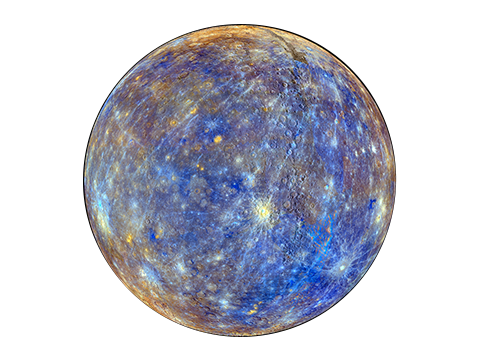

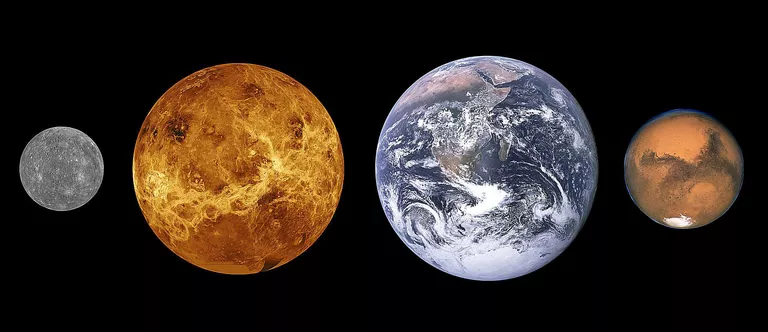
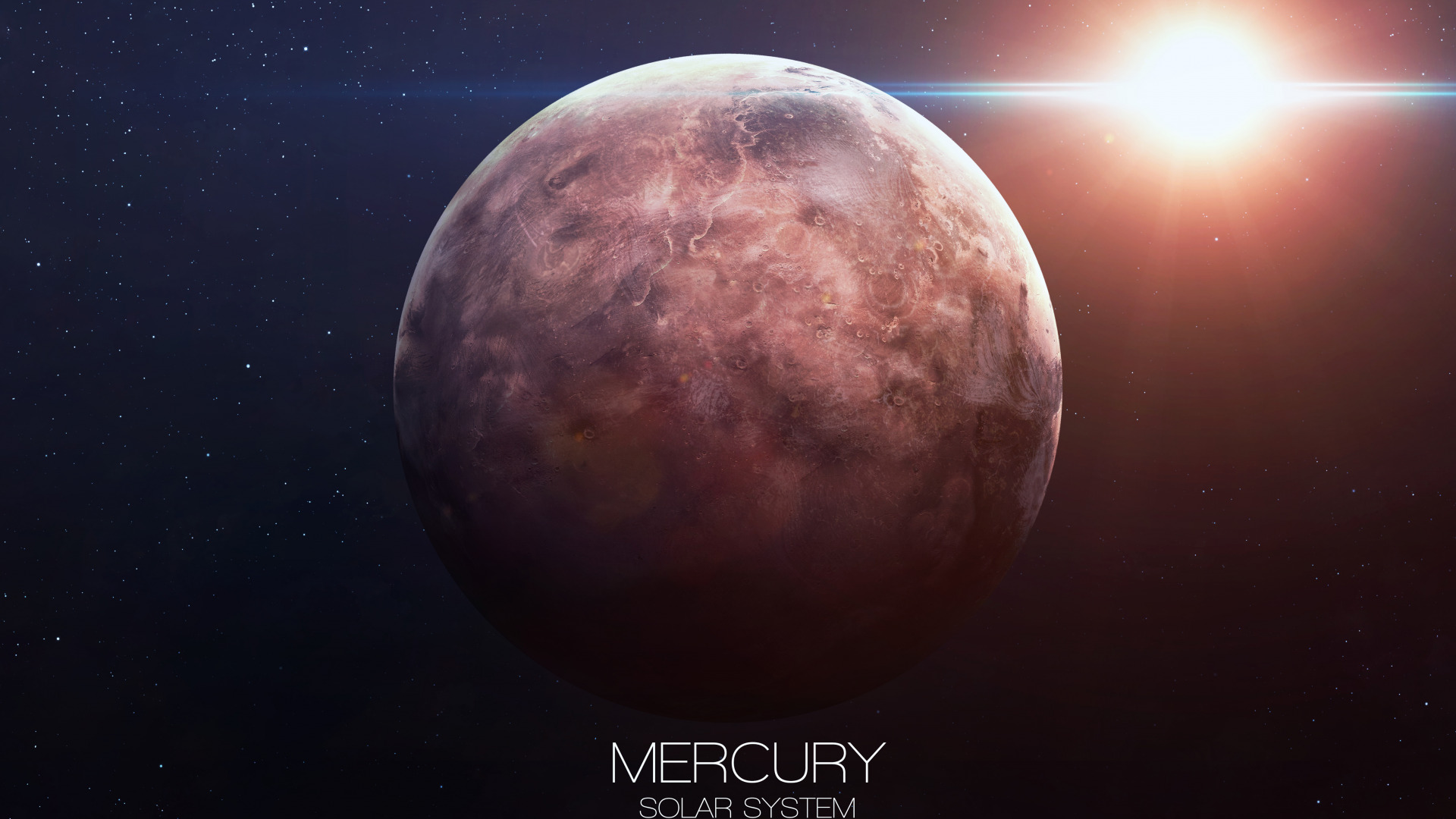
The smallest planet in our solar system and nearest to the Sun, Mercury is only slightly larger than Earth's Moon. From the surface of Mercury, the Sun would appear more than three times as large as it does when viewed from Earth, and the sunlight would be as much as seven times brighter.
Mercury's surface temperatures are both extremely hot and cold. Because the planet is so close to the Sun, day temperatures can reach highs of 800°F (430°C). Without an atmosphere to retain that heat at night, temperatures can dip as low as -290°F (-180°C).
Despite its proximity to the Sun, Mercury is not the hottest planet in our solar system – that title belongs to nearby Venus, thanks to its dense atmosphere. But Mercury is the fastest planet, zipping around the Sun every 88 Earth days.
Mercury's environment is not conducive to life as we know it. The temperatures and solar radiation that characterize this planet are most likely too extreme for organisms to adapt to.
With a radius of 1,516 miles (2,440 kilometers), Mercury is a little more than 1/3 the width of Earth. If Earth were the size of a nickel, Mercury would be about as big as a blueberry.
From an average distance of 36 million miles (58 million kilometers), Mercury is 0.4 astronomical units away from the Sun. One astronomical unit (abbreviated as AU), is the distance from the Sun to Earth. From this distance, it takes sunlight 3.2 minutes to travel from the Sun to Mercury.
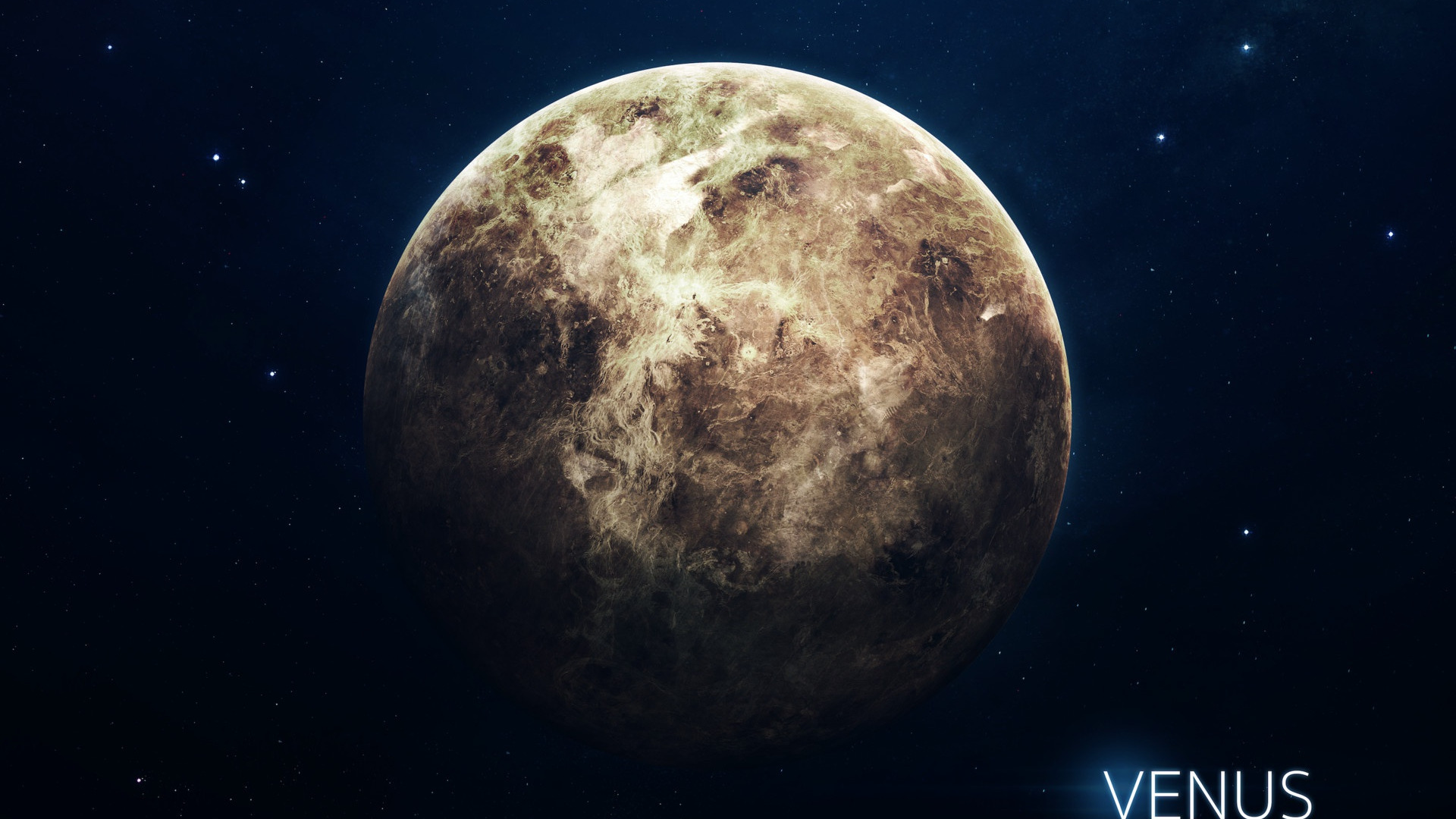
Venus is the second planet from the Sun and is Earth’s closest planetary neighbor. It’s one of the four inner, terrestrial (or rocky) planets, and it’s often called Earth’s twin because it’s similar in size and density. These are not identical twins, however – there are radical differences between the two worlds.
Venus has a thick, toxic atmosphere filled with carbon dioxide and it’s perpetually shrouded in thick, yellowish clouds of sulfuric acid that trap heat, causing a runaway greenhouse effect. It’s the hottest planet in our solar system, even though Mercury is closer to the Sun. Surface temperatures on Venus are about 900 degrees Fahrenheit (475 degrees Celsius) – hot enough to melt lead. The surface is a rusty color and it’s peppered with intensely crunched mountains and thousands of large volcanoes. Scientists think it’s possible some volcanoes are still active.
Venus has crushing air pressure at its surface – more than 90 times that of Earth – similar to the pressure you'd encounter a mile below the ocean on Earth.
Another big difference from Earth – Venus rotates on its axis backward, compared to most of the other planets in the solar system. This means that, on Venus, the Sun rises in the west and sets in the east, opposite to what we experience on Earth. (It’s not the only planet in our solar system with such an oddball rotation – Uranus spins on its side.)
Venus was the first planet to be explored by a spacecraft – NASA’s Mariner 2 successfully flew by and scanned the cloud-covered world on Dec. 14, 1962. Since then, numerous spacecraft from the U.S. and other space agencies have explored Venus, including NASA’s Magellan, which mapped the planet's surface with radar. Soviet spacecraft made the most successful landings on the surface of Venus to date, but they didn’t survive long due to the extreme heat and crushing pressure. An American probe, one of NASA's Pioneer Venus Multiprobes, survived for about an hour after impacting the surface in 1978.
More recent Venus missions include ESA’s Venus Express (which orbited from 2006 until 2016) and Japan’s Akatsuki Venus Climate Orbiter (orbiting since 2016).
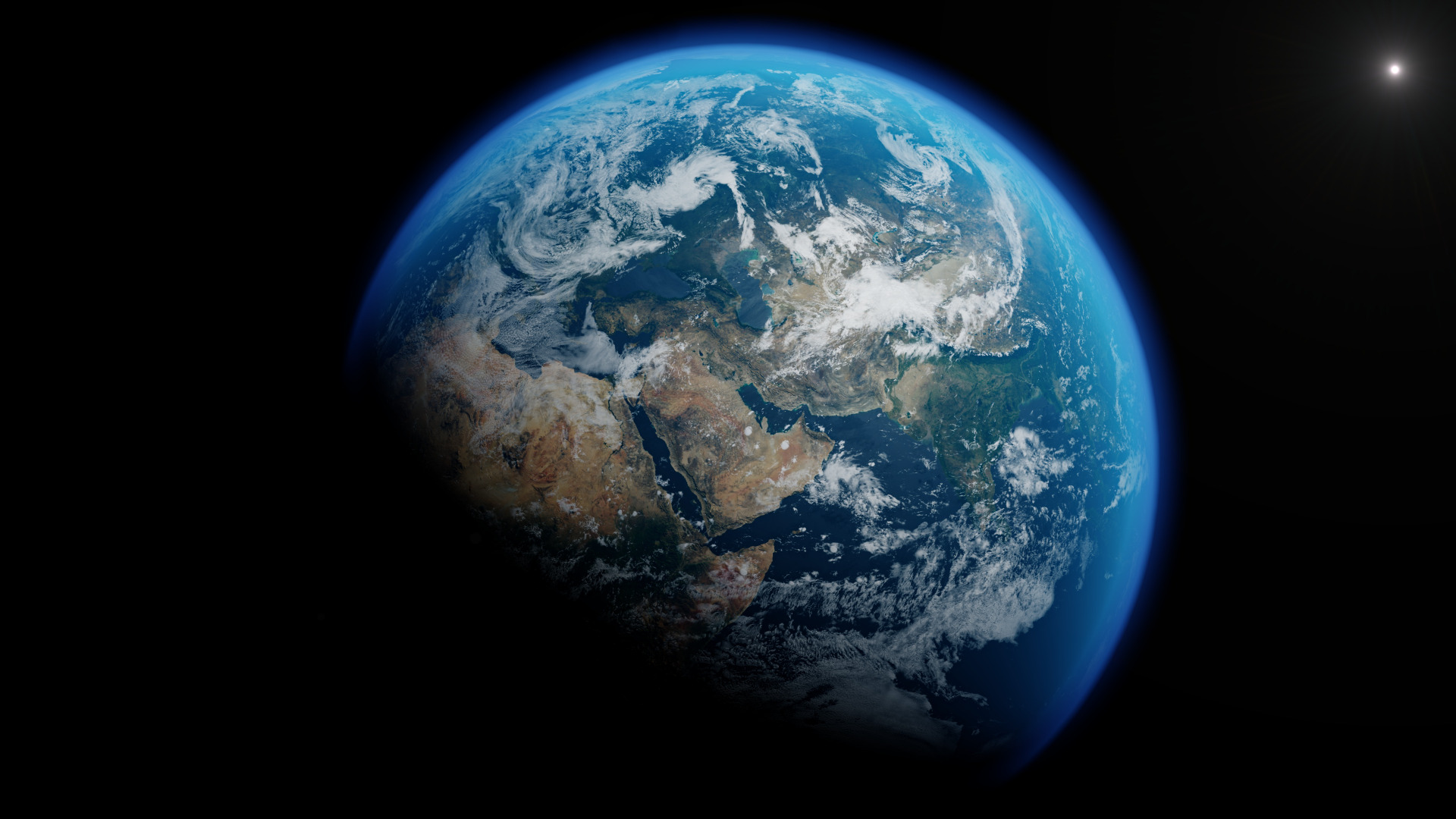
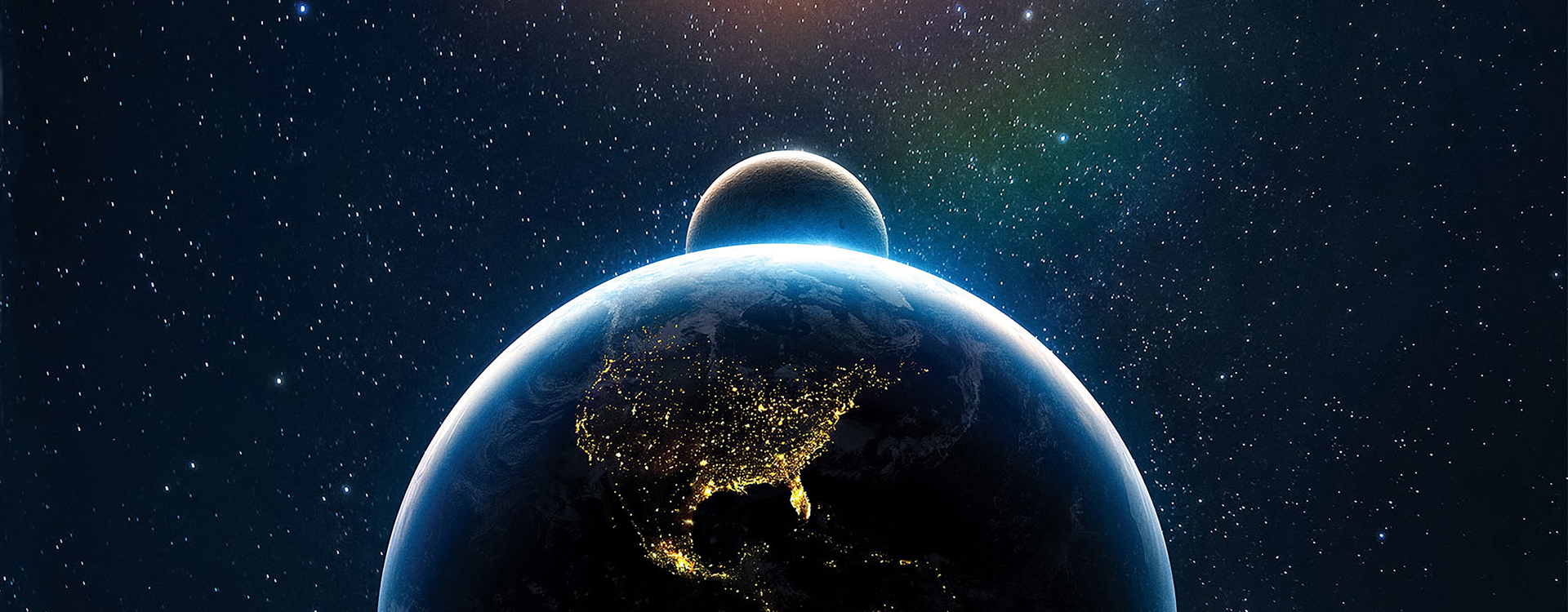
Our home planet is the third planet from the Sun, and the only place we know of so far that’s inhabited by living things. While Earth is only the fifth largest planet in the solar system, it is the only world in our solar system with liquid water on the surface. Just slightly larger than nearby Venus, Earth is the biggest of the four planets closest to the Sun, all of which are made of rock and metal.
With a radius of 3,959 miles (6,371 kilometers), Earth is the biggest of the terrestrial planets and the fifth largest planet overall.
From an average distance of 93 million miles (150 million kilometers), Earth is exactly one astronomical unit away from the Sun because one astronomical unit (abbreviated as AU), is the distance from the Sun to Earth. This unit provides an easy way to quickly compare planets' distances from the Sun.
It takes about eight minutes for light from the Sun to reach our planet.
Earth is composed of four main layers, starting with an inner core at the planet's center, enveloped by the outer core, mantle, and crust.
The inner core is a solid sphere made of iron and nickel metals about 759 miles (1,221 kilometers) in radius. There the temperature is as high as 9,800 degrees Fahrenheit (5,400 degrees Celsius). Surrounding the inner core is the outer core. This layer is about 1,400 miles (2,300 kilometers) thick, made of iron and nickel fluids.
In between the outer core and crust is the mantle, the thickest layer. This hot, viscous mixture of molten rock is about 1,800 miles (2,900 kilometers) thick and has the consistency of caramel. The outermost layer, Earth's crust, goes about 19 miles (30 kilometers) deep on average on land. At the bottom of the ocean, the crust is thinner and extends about 3 miles (5 kilometers) from the seafloor to the top of the mantle.
Near the surface, Earth has an atmosphere that consists of 78% nitrogen, 21% oxygen, and 1% other gases such as argon, carbon dioxide, and neon. The atmosphere affects Earth's long-term climate and short-term local weather and shields us from much of the harmful radiation coming from the Sun. It also protects us from meteoroids, most of which burn up in the atmosphere, seen as meteors in the night sky, before they can strike the surface as meteorites.
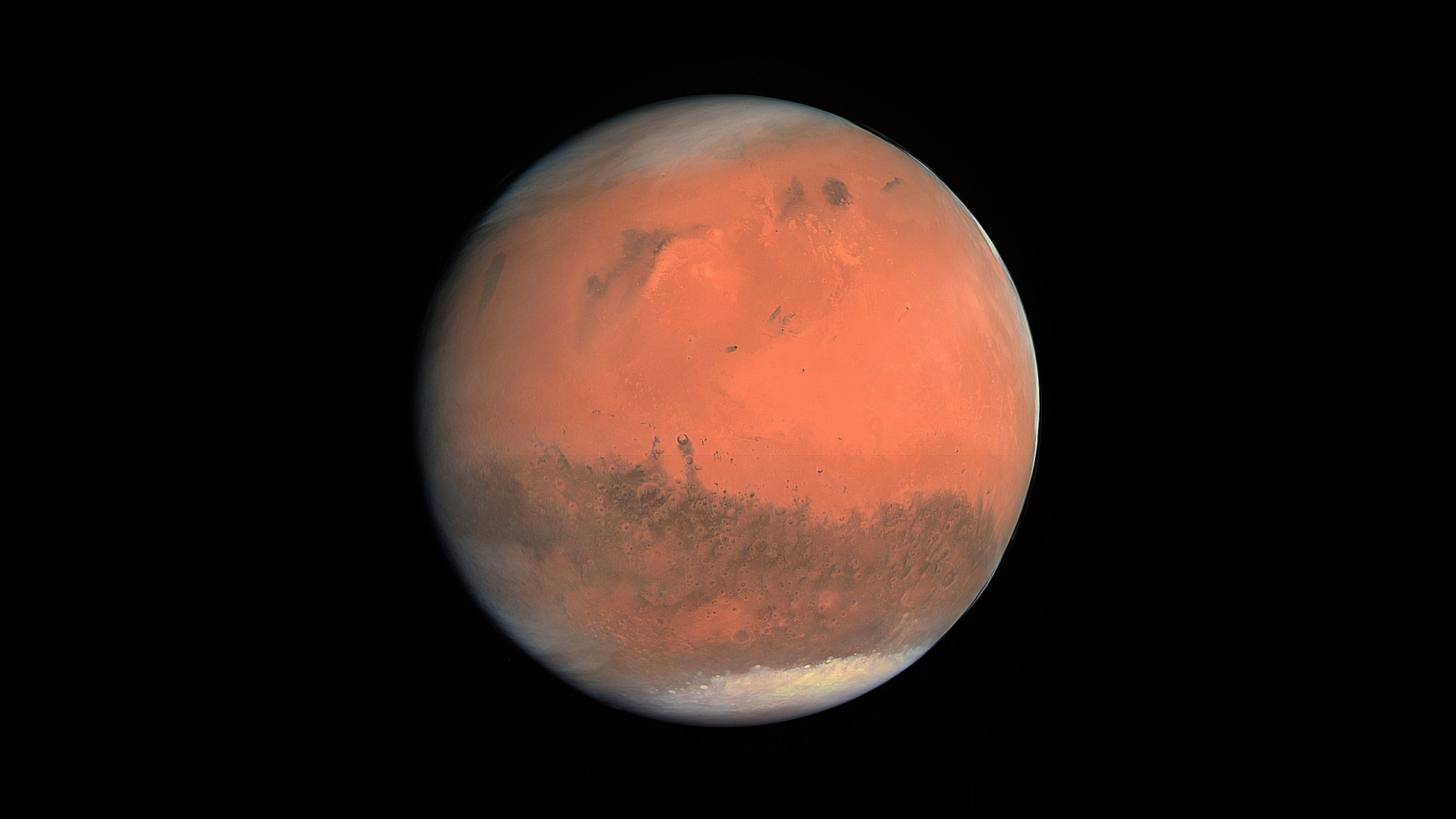
Mars is no place for the faint-hearted. It’s dry, rocky, and bitter cold. The fourth planet from the Sun, Mars is one of Earth's two closest planetary neighbors (Venus is the other). Mars is one of the easiest planets to spot in the night sky – it looks like a bright red point of light.
Despite being inhospitable to humans, robotic explorers – like NASA's new Perseverance rover – are serving as pathfinders to eventually get humans to the surface of the Red Planet.
With a radius of 2,106 miles (3,390 kilometers), Mars is about half the size of Earth. If Earth were the size of a nickel, Mars would be about as big as a raspberry.
From an average distance of 142 million miles (228 million kilometers), Mars is 1.5 astronomical units away from the Sun. One astronomical unit (abbreviated as AU), is the distance from the Sun to Earth. From this distance, it takes sunlight 13 minutes to travel from the Sun to Mars.
Scientists don't expect to find living things currently thriving on Mars. Instead, they're looking for signs of life that existed long ago, when Mars was warmer and covered with water.
Mars has two small moons, Phobos and Deimos, that may be captured asteroids. They're potato-shaped because they have too little mass for gravity to make them spherical.
The moons get their names from the horses that pulled the chariot of the Greek god of war, Ares.
Phobos, the innermost and larger moon, is heavily cratered, with deep grooves on its surface. It is slowly moving towards Mars and will crash into the planet or break apart in about 50 million years.
Deimos is about half as big as Phobos and orbits two and a half times farther away from Mars. Oddly-shaped Deimos is covered in loose dirt that often fills the craters on its surface, making it appear smoother than pockmarked Phobos.