

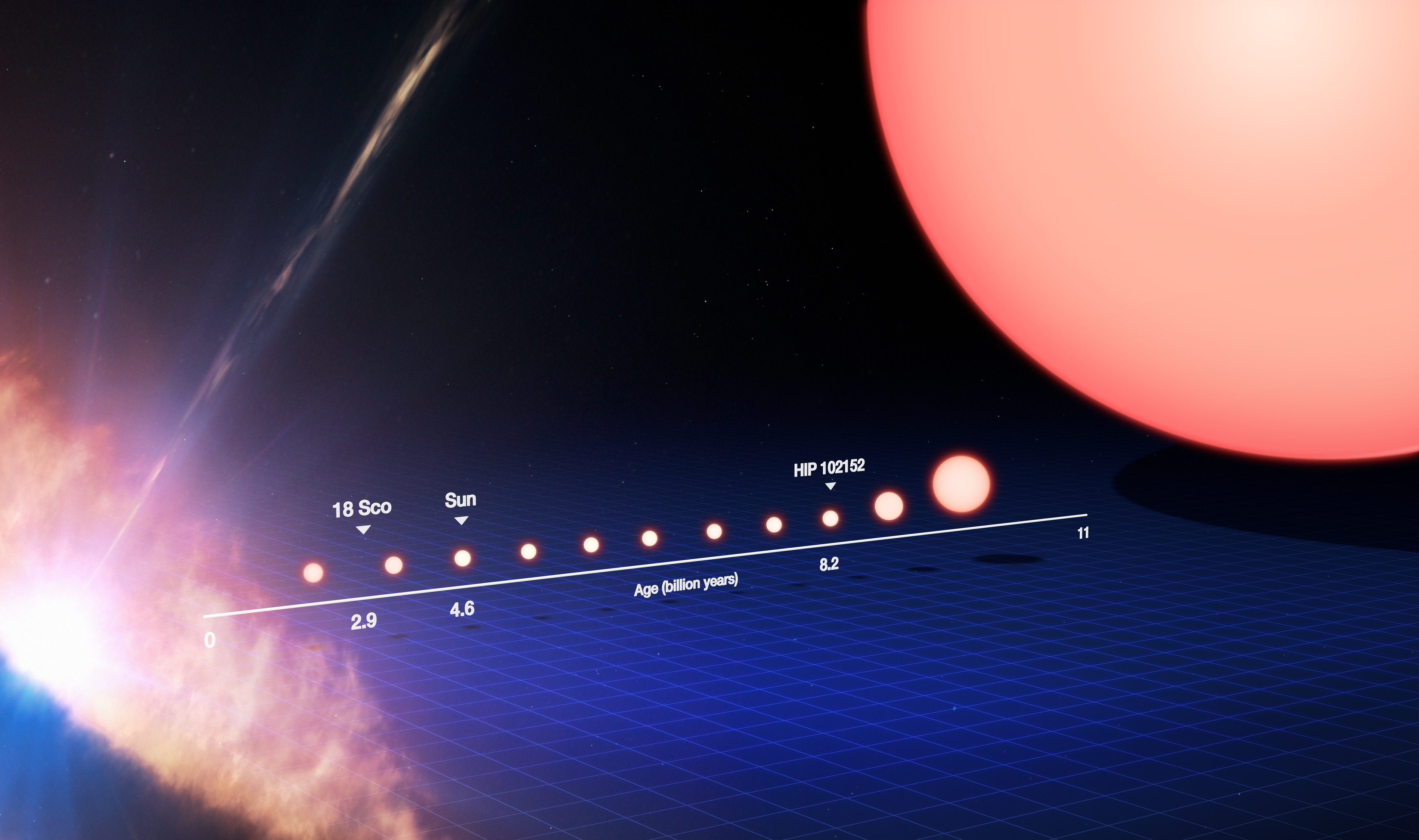
The Sun formed about 4.6 billion years ago in a giant, spinning cloud of gas and dust called the solar nebula. As the
nebula collapsed under its own gravity, it spun faster and flattened into a disk. Most of the nebula's material was
pulled toward the center to form our Sun, which accounts for 99.8% of our solar system’s mass. Much of the remaining
material formed the planets and other objects that now orbit the Sun. (The rest of the leftover gas and dust was blown
away by the young Sun's early solar wind.)
Like all stars, our Sun will eventually run out of energy. When it starts to die, the Sun will expand into a red giant
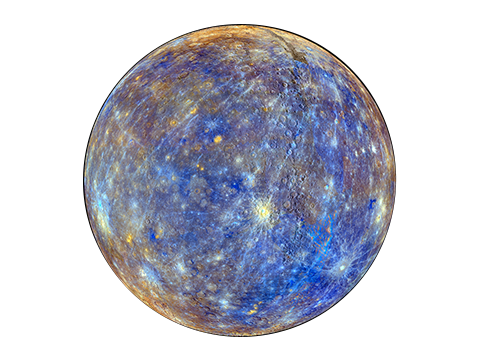
star, becoming so large that it will engulf Mercury and Venus, and possibly Earth as well. Scientists predict the Sun
is a little less than halfway through its lifetime and will last another 5 billion years or so before it becomes a
white dwarf.
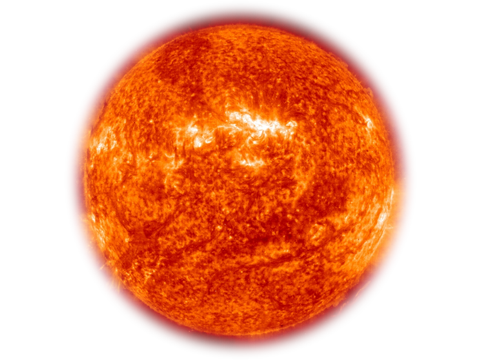
The Sun is a huge ball of hydrogen and helium held together by its own gravity.
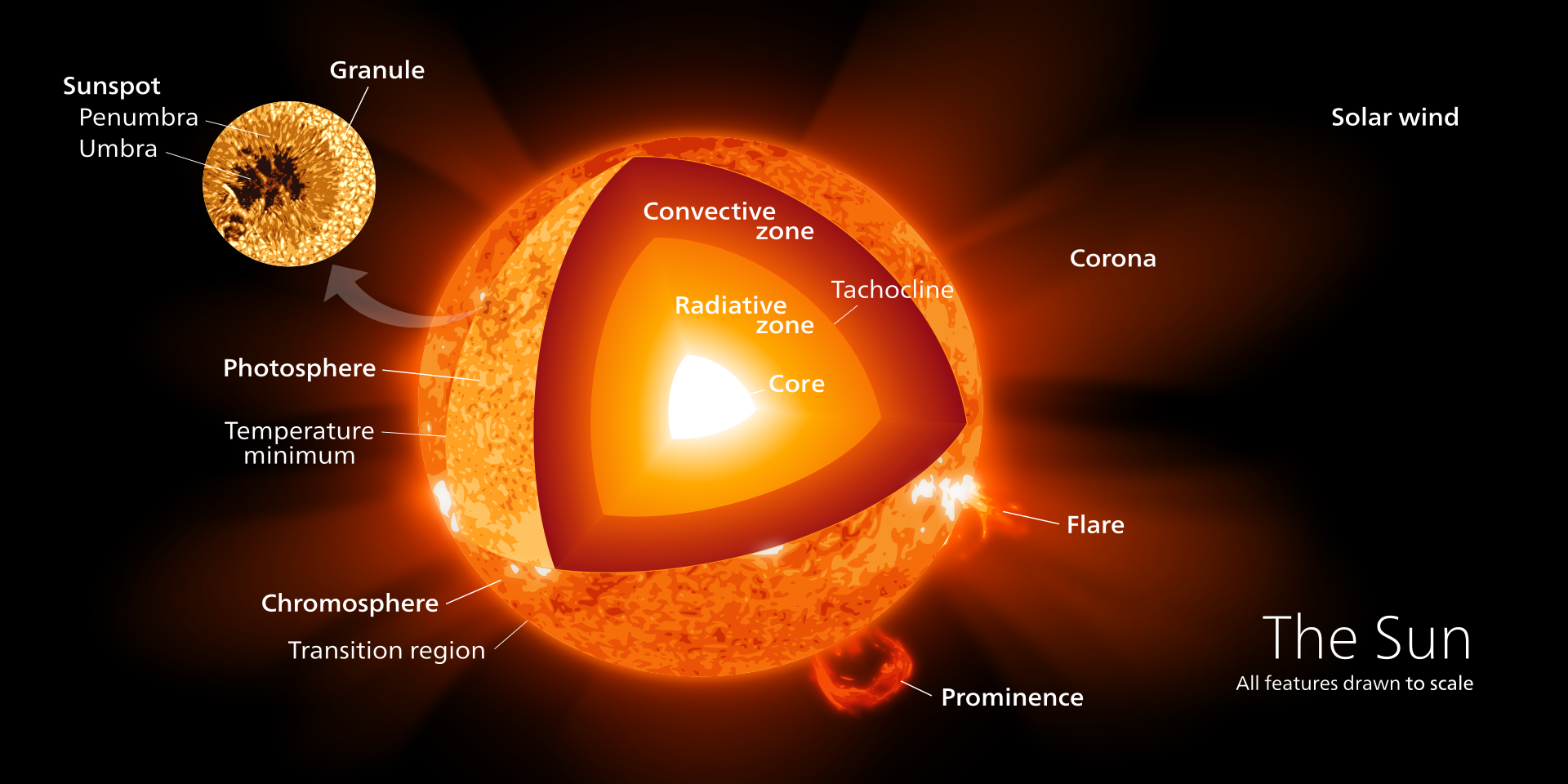
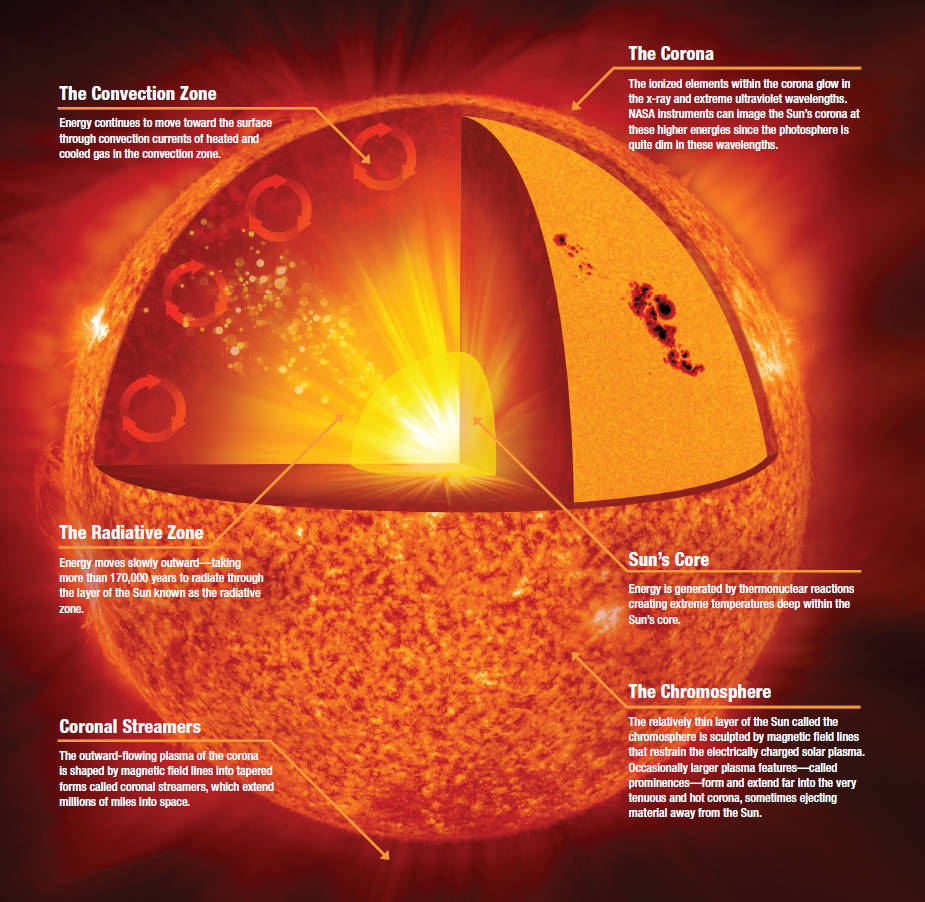
The Sun has several regions. The interior regions include the core, the radiative zone, and the convection zone. Moving outward – the visible surface or photosphere is next, then the chromosphere, followed by the transition zone, and then the corona – the Sun’s expansive outer atmosphere.
Once material leaves the corona at supersonic speeds, it becomes the solar wind, which forms a huge magnetic "bubble" around the Sun, called the heliosphere. The heliosphere extends beyond the orbit of the planets in our solar system. Thus, Earth exists inside the Sun’s atmosphere. Outside the heliosphere is interstellar space.
The core is the hottest part of the Sun. Nuclear reactions here – where hydrogen is fused to form helium – power the Sun’s heat and light. Temperatures top 27 million °F (15 million °C) and it’s about 86,000 miles (138,000 kilometers) thick. The density of the Sun’s core is about 150 grams per cubic centimeter (g/cm³). That is approximately 8 times the density of gold (19.3 g/cm³) or 13 times the density of lead (11.3 g/cm³).
Energy from the core is carried outward by radiation. This radiation bounces around the radiative zone, taking about 170,000 years to get from the core to the top of the convection zone. Moving outward, in the convection zone, the temperature drops below 3.5 million °F (2 million °C). Here, large bubbles of hot plasma (a soup of ionized atoms) move upward toward the photosphere, which is the layer we think of as the Sun's surface.
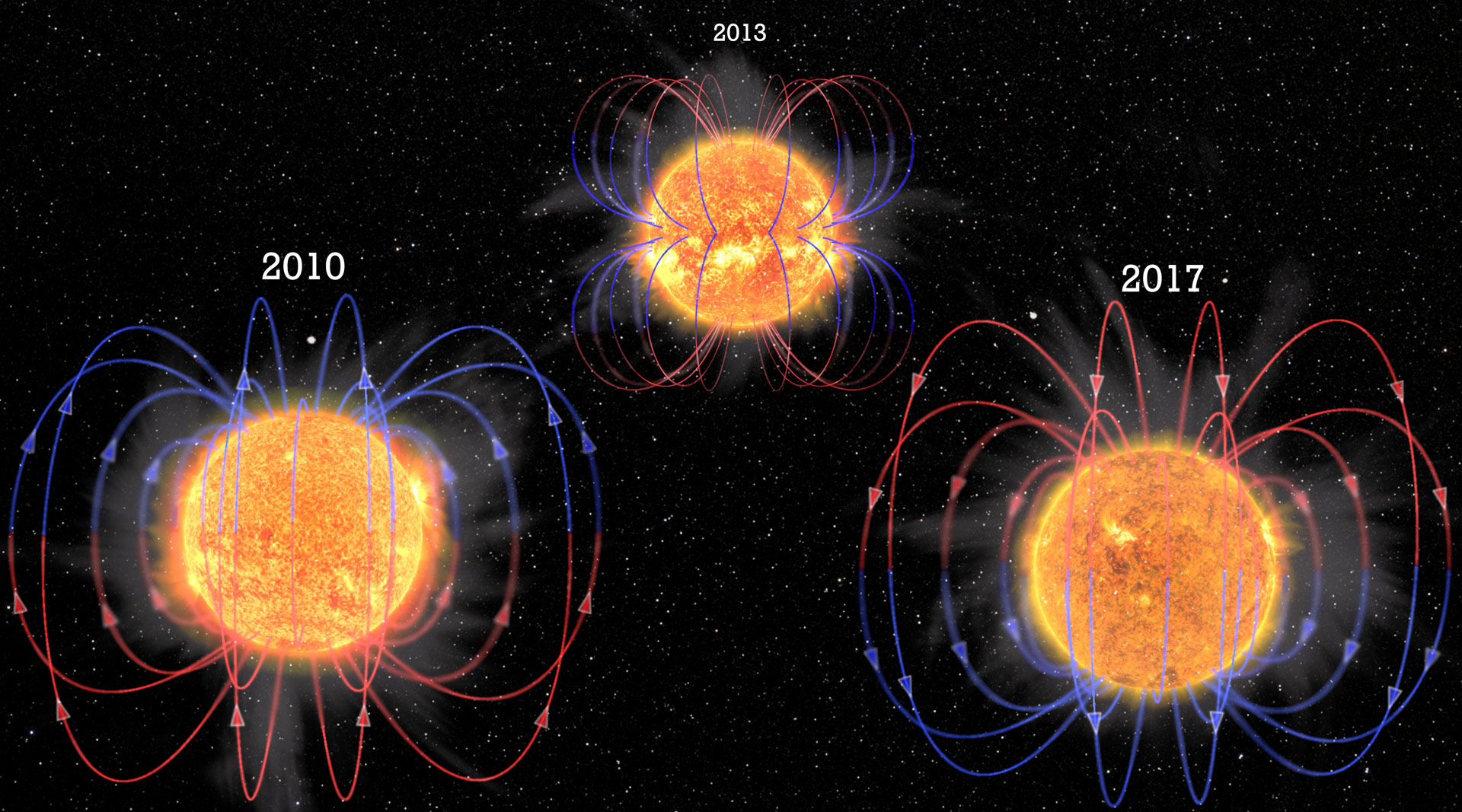
The Sun generates magnetic fields that extend out into space to form the interplanetary magnetic field – the magnetic field that pervades our solar system. The field is carried through the solar system by the solar wind – a stream of electrically charged gas blowing outward from the Sun in all directions. The vast bubble of space dominated by the Sun’s magnetic field is called the heliosphere. Since the Sun rotates, the magnetic field spins out into a large rotating spiral, known as the Parker spiral. This spiral has a shape something like the pattern of water from a rotating garden sprinkler.
The Sun doesn't behave the same way all the time. It goes through phases of high and low activity, which make up the solar cycle. Approximately every 11 years, the Sun’s geographic poles change their magnetic polarity – that is, the north and south magnetic poles swap. During this cycle, the Sun's photosphere, chromosphere, and corona change from quiet and calm to violently active.
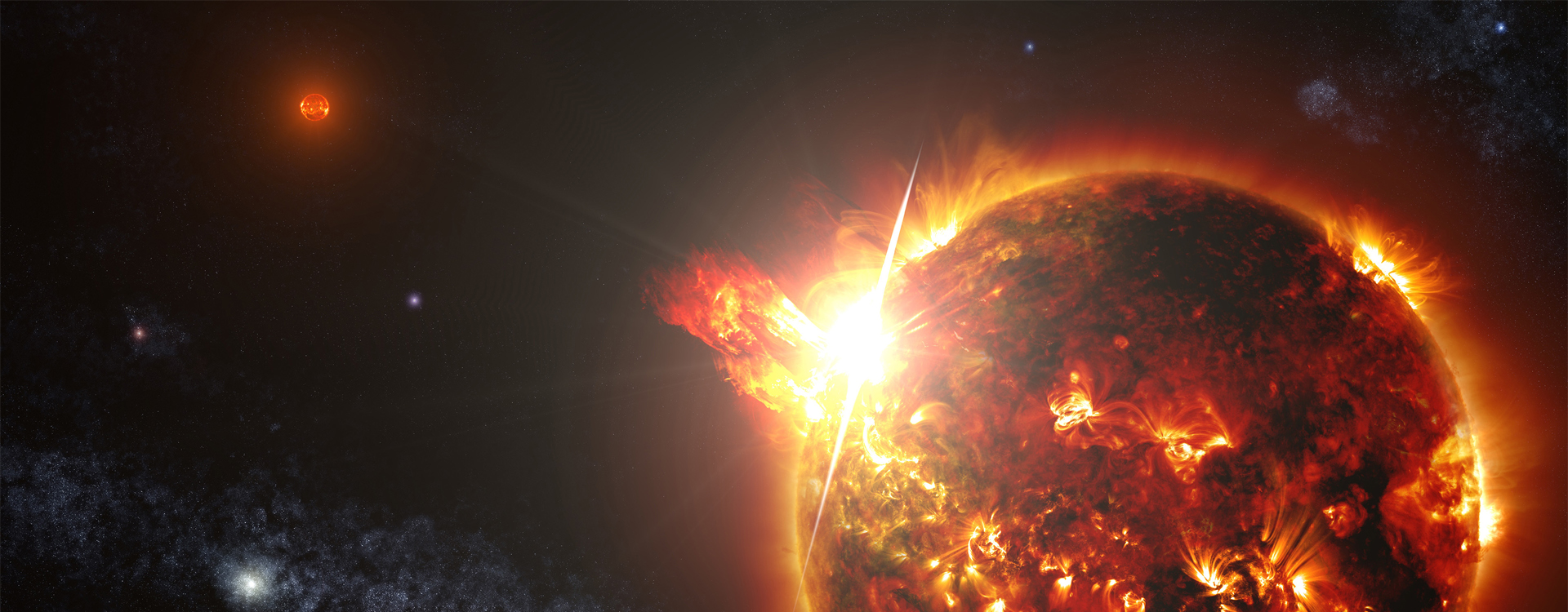
The height of the Sun’s activity cycle, known as solar maximum, is a time of greatly increased solar storm activity. Sunspots, eruptions called solar flares, and coronal mass ejections are common at solar maximum. The latest solar cycle – Solar Cycle 25 – started in December 2019 when solar minimum occurred, according to the Solar Cycle 25 Prediction Panel, an international group of experts co-sponsored by NASA and NOAA. Scientists now expect the Sun’s activity to ramp up toward the next predicted maximum in July 2025.
Solar activity can release huge amounts of energy and particles, some of which impact us here on Earth. Much like weather on Earth, conditions in space – known as space weather – are always changing with the Sun’s activity. "Space weather" can interfere with satellites, GPS, and radio communications. It also can cripple power grids, and corrode pipelines that carry oil and gas.
The strongest geomagnetic storm on record is the Carrington Event, named for British astronomer Richard Carrington who observed the Sept. 1, 1859, solar flare that triggered the event. Telegraph systems worldwide went haywire. Spark discharges shocked telegraph operators and set their telegraph paper on fire. Just before dawn the next day, skies all over Earth erupted in red, green, and purple auroras – the result of energy and particles from the Sun interacting with Earth’s atmosphere. Reportedly, the auroras were so brilliant that newspapers could be read as easily as in daylight. The auroras, or Northern Lights, were visible as far south as Cuba, the Bahamas, Jamaica, El Salvador, and Hawaii.
Another solar flare on March 13, 1989, caused geomagnetic storms that disrupted electric power transmission from the Hydro Québec generating station in Canada, plunging 6 million people into darkness for 9 hours. The 1989 flare also caused power surges that melted power transformers in New Jersey.
In December 2005, X-rays from a solar storm disrupted satellite-to-ground communications and Global Positioning System (GPS) navigation signals for about 10 minutes.
NOAA’s Space Weather Prediction Center monitors active regions on the Sun and issues watches, warnings, and alerts for hazardous space weather events.